

Contents

KVKK · Cookie Management · Digital Compliance
What Is KVKK-Compliant Cookie Management Software and Why Is It Necessary?
Cookies used on websites must be managed not only through a visible notification but also through information, user preferences, and technical implementation processes.
Cookie Detection Identification of cookies and tracking technologies operating on the website.
Preference Management Providing users with category-based acceptance, rejection, and preference-change options.
Technical Implementation Preventing non-essential code from operating until consent is provided.
Websites use various cookies to improve the visitor experience, manage sessions, measure website performance, and enhance marketing activities. However, collecting data through cookies that may be associated with users’ devices, preferences, or online behaviour requires a carefully managed process from a personal data protection perspective. At this point, simply placing a cookie notification on the screen is not sufficient. Users must be informed, given a genuine choice, and their decisions must be implemented technically.
KVKK-compliant cookie management software is a technological solution that helps identify and classify the cookies used on a website and activate them according to user preferences. These systems can centrally manage processes such as displaying cookie notifications, preventing non-essential cookies from operating without consent, recording user preferences, and updating them when necessary. However, no software can guarantee legal compliance on its own. The software must be configured correctly by considering the company’s data-processing activities and current legislation.

What Are Cookies and Why Are They Used on Websites?
Cookies are small data files that can be stored in a user’s browser or device when they visit a website. These files can help keep a session active, remember a language selection, preserve a shopping cart, or reapply previously selected preferences. Cookies help websites provide a faster, more convenient, and personalised experience.
However, not all cookies serve the same purpose. Essential cookies enable the website’s core functions, while functional cookies can remember user preferences. Performance and analytics cookies help determine how visitors use the website, while advertising and marketing cookies may be used to profile users according to their interests. The purpose, duration, and first-party or third-party nature of a cookie are important when determining the applicable condition for processing personal data.
EssentialEnables the website’s core functions.
FunctionalRemembers language, display, and similar preferences.
Analytics / PerformanceHelps measure visits and usage behaviour.
Advertising / MarketingMay be used to provide content and advertisements based on user interests.
Why Is Cookie Management Important Under the KVKK?
Personal Data Protection Law No. 6698 requires personal data to be processed in accordance with certain principles and legal processing conditions. If a cookie collects information that makes a user directly or indirectly identifiable, the relevant processing activities may fall within the scope of the KVKK. Therefore, the cookies used on a website, the data they collect, and the purposes for which those data are processed must be clearly determined.
The Guidelines on Cookie Practices published by the Turkish Personal Data Protection Authority explain the criteria that must be considered in personal data-processing activities conducted through cookies. Explicit consent may be required, particularly for cookies that are not strictly necessary for a service explicitly requested by the user and that are not based on another legal processing condition. Cookie management is therefore not merely a technical website feature; it is a process connected to the data controller’s transparency and legal compliance obligations.
How Does KVKK-Compliant Cookie Management Software Work?
Cookie management software first helps identify the cookies and similar tracking technologies used on a website. Identified cookies can be divided into categories such as essential, functional, analytics, performance, advertising, or marketing. This makes it possible to provide users with an understandable preference screen while showing more clearly which category is used for which purpose.
When a user visits the website, the cookie management panel is activated. Non-essential cookies are enabled or blocked according to the user’s preferences. Users may consent only to specific categories, reject all optional cookies, or withdraw previously provided consent. Advanced systems record the selected preferences, enabling the management of consent history and the more systematic implementation of changes made to the cookie policy.
1. ScanningCookies and tracking technologies are identified.
2. ClassificationCookies are divided into categories according to their purposes.
3. PreferenceThe user makes category-based selections.
4. RecordingConsent history is managed systematically.
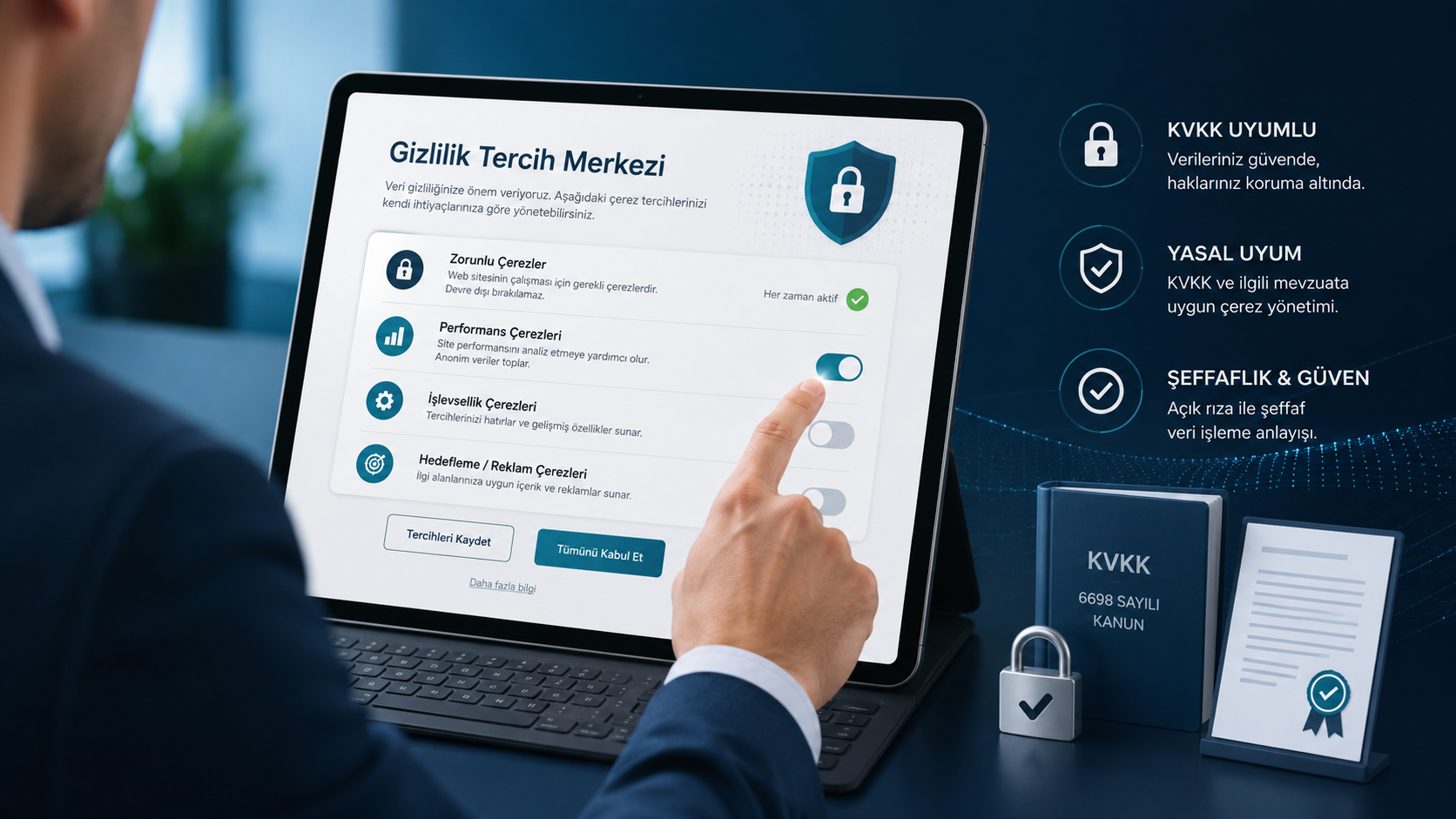
How Should Explicit Consent and User Preferences Be Managed?
Explicit consent must relate to a specific subject, be based on information, and be expressed freely. Simply continuing to browse a website cannot always be considered valid explicit consent. Similarly, pre-ticked boxes, designs that steer users towards acceptance, or hiding the rejection option may create problems in terms of ensuring a freely given choice.
In decisions issued by the Turkish Personal Data Protection Authority, presenting “accept”, “reject”, and “preferences” options in a balanced manner within the cookie panel is described as good practice. The colour, size, and visibility of buttons should not pressure users into making a particular choice. Furthermore, an explicit consent text and a privacy notice serve different purposes. The Authority’s announcement dated 18 February 2026 also clearly emphasised that these texts must be prepared separately.
Accept
Reject
Preferences
What Information Should a Cookie Privacy Notice Contain?
A cookie privacy notice should not be limited to informing users that cookies are used on the website. It should provide clear information about the identity of the data controller, the purposes for which data are processed through cookies, the recipients to whom personal data may be transferred and the purposes of such transfers, the method of data collection, the legal basis, and the rights of the data subject. The language used must be simple, accessible, and easy for users to understand.
Cookie-specific information should preferably include the cookie’s name, purpose, duration, category, and whether it is a first-party or third-party cookie. It should also explain how users can change their preferences and withdraw consent. Failing to provide any information about the cookies used on a website or failing to provide the necessary preference mechanism for non-essential cookies may create risks under the KVKK.
✓ Identity of the data controller ✓ Processing purposes and legal basis ✓ Cookie name, duration, and category ✓ First-party or third-party information ✓ Transfer information and data-subject rights ✓ Method for changing preferences and withdrawing consent
Why Is Cookie Management Software Necessary?
Today, websites may use numerous third-party services, including analytics tools, advertising platforms, social media plugins, video services, map applications, and live-support software. Each of these services may place different cookies, and the cookie structure may change over time as updates are introduced. Manually controlling all these technologies is difficult and prone to error, particularly on comprehensive websites.
Cookie management software makes this complex structure more manageable. Processes such as preventing non-essential code from operating before user preferences are obtained, organising cookie categories, and maintaining consent records can be managed centrally. This allows companies to do more than display a visible cookie banner; they can establish a more consistent system that reflects user preferences in the website’s technical operating structure.

Its Importance for User Trust and Brand Reputation
Users want to know which data are collected on the websites they visit and why those data are used. Unclear texts, complicated preference screens, or notifications that provide only an “accept” option can create distrust. In contrast, a transparent cookie management process demonstrates the importance a company places on protecting personal data.
Providing users with genuine control is valuable not only for regulatory compliance but also for brand reputation. Websites that allow individuals to change their preferences, avoid unnecessary pressure, and understand which data are used and why create a more trustworthy impression. While building trust in the digital environment takes considerable time, a single non-transparent practice can quickly damage that trust.
Operational Advantages for Businesses
Cookie management software can help manage consent processes across different websites from a single centre. Companies with multiple domains, brands, or languages can monitor different cookie texts, category structures, and user preferences more systematically. Repeating cookie scans at regular intervals makes it easier to identify newly added tracking tools.
These systems can also strengthen coordination between software, legal, marketing, and information security teams. When the marketing team adds a new analytics tool, evaluating the relevant cookies and assigning them to the correct category can proceed in a more controlled manner. Cookie management therefore becomes a regular part of the company’s digital operations rather than a one-time task monitored solely by the legal department.
What Should Be Considered When Choosing KVKK-Compliant Cookie Management Software?
When selecting cookie management software, the decision should not be based solely on whether it offers a visually impressive notification panel. The software should be capable of scanning cookies, blocking non-essential scripts until consent is provided, offering category-based preferences, and allowing users to withdraw consent easily. Mobile compatibility, multilingual support, and integration with different content management systems should also be evaluated.
Other important criteria include the secure storage of consent records, customisation of the panel design, and the ability to update cookie policies. However, using the software’s ready-made texts without any evaluation is not appropriate. Every company uses different tools, has different data-processing purposes, and works with different third-party services. Technical installation must therefore be supported by a corporate compliance process conducted jointly by legal, information security, and software teams.
Technical Scanning and BlockingIdentifying cookies and stopping non-essential scripts before consent is provided.
Category-Based PreferencesBalanced presentation of acceptance, rejection, and detailed category-selection options.
Mobile and Multilingual SupportA consistent user experience across different screen sizes and languages.
Secure Consent RecordsSecure and auditable storage of preference history.
Is Using Only a Cookie Banner Sufficient?
Displaying a cookie notification at the top or bottom of a website does not provide effective cookie management on its own. If advertising, analytics, or performance cookies have already begun operating before the user provides consent through the banner, the visible and technical aspects of the system conflict with one another. It is therefore necessary to control technically which cookies operate before the user’s preferences are obtained.
Similarly, grouping all cookies under a single consent option may not provide users with sufficient control. Offering category-based preferences, such as allowing analytics cookies while rejecting advertising cookies, creates a more transparent approach. The preference panel should also remain permanently available in an accessible section of the website, enabling users to change their decisions easily at a later time.

Proper Cookie Management for a Trustworthy Digital Experience
KVKK-compliant cookie management software is an important digital compliance tool that enables cookies to be identified, classified, activated according to user preferences, and consent processes to be monitored systematically. While simplifying technical processes for companies, it provides users with a more transparent, understandable, and controllable internet experience. However, genuine compliance cannot be achieved merely by purchasing software; the software must be configured according to the appropriate legal and technical requirements.
Companies that give cookie management the necessary attention can fulfil their personal data protection responsibilities more systematically. They can also strengthen users’ trust in the brand and reduce potential future compliance risks. In a rapidly evolving digital world, respecting user privacy is no longer merely a legal responsibility; it is one of the fundamental requirements for building a sustainable and reputable brand.




Do Comment